The "15-Minute Suburb": How Metro 2B and MTHL are Redefining Chembur's Value
For decades, Chembur was the suburb that Mumbaikars drove through. Now, with a sea bridge already cutting Navi Mumbai to 20 minutes away and a metro interchange weeks from opening, it is becoming the suburb they are choosing to live in.
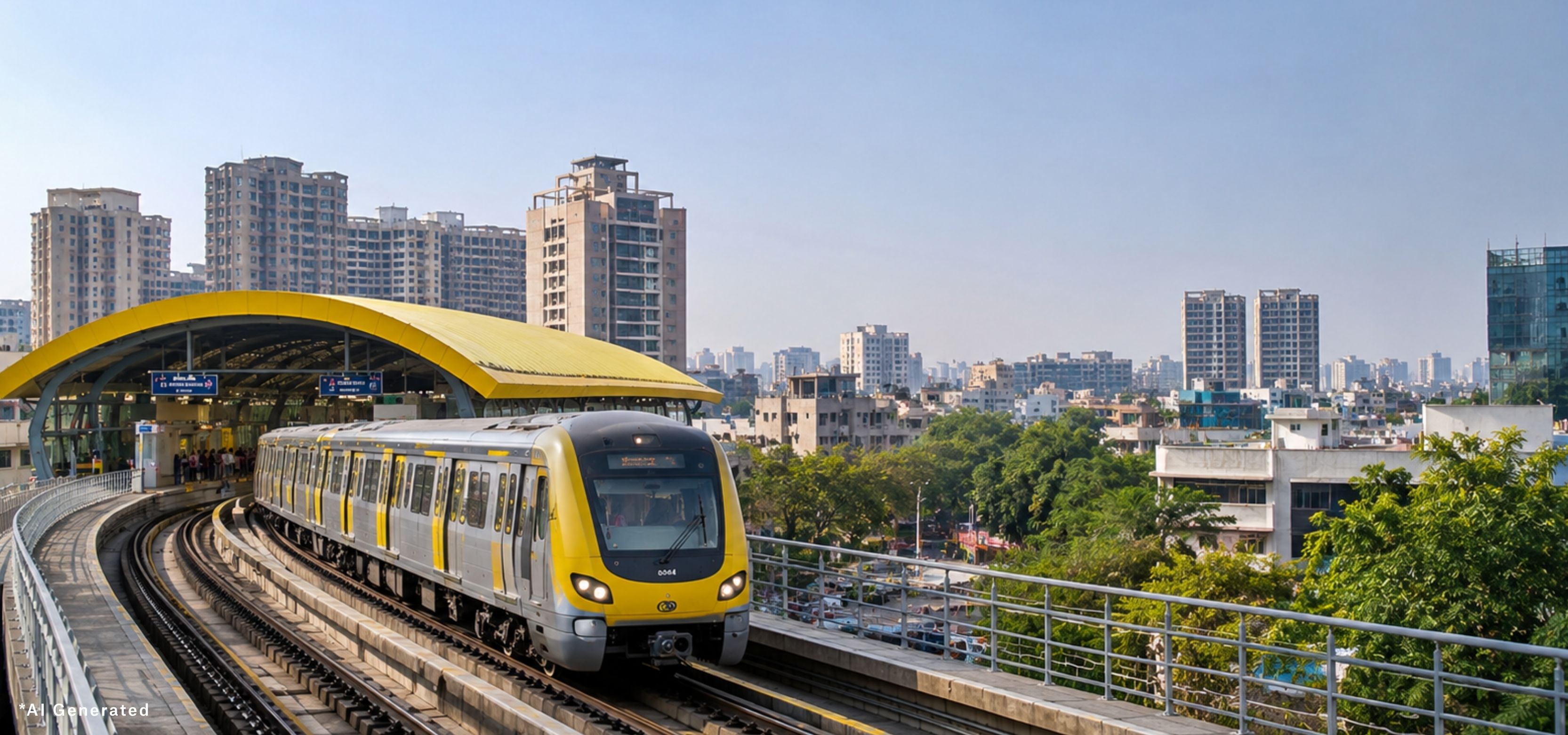
Two projects in particular are accelerating this momentum. The Mumbai Metro Line 2B (Yellow Line) is a 23.643-kilometre elevated corridor connecting DN Nagar to Mandale with a dedicated station in the heart of Chembur. This makes getting around the city much easier and connects the suburb more closely to Mumbai’s growing metro network. Complementing this, the Mumbai Trans Harbour Link (Atal Setu), India’s longest sea bridge, cuts travel time between Sewri and Navi Mumbai to about 20 minutes. This Atal Setu connectivity makes cross-city travel quicker and more convenient.
As these developments become fully operational, Chembur is emerging as a well-connected location that combines established neighbourhoods with growing accessibility and promising future potential. For anyone exploring flats in Chembur, this article will take you through how these infrastructure upgrades are reshaping connectivity and what it means for the area’s real estate growth.
Why Chembur Is Mumbai's Most Strategically Located Suburb Right Now
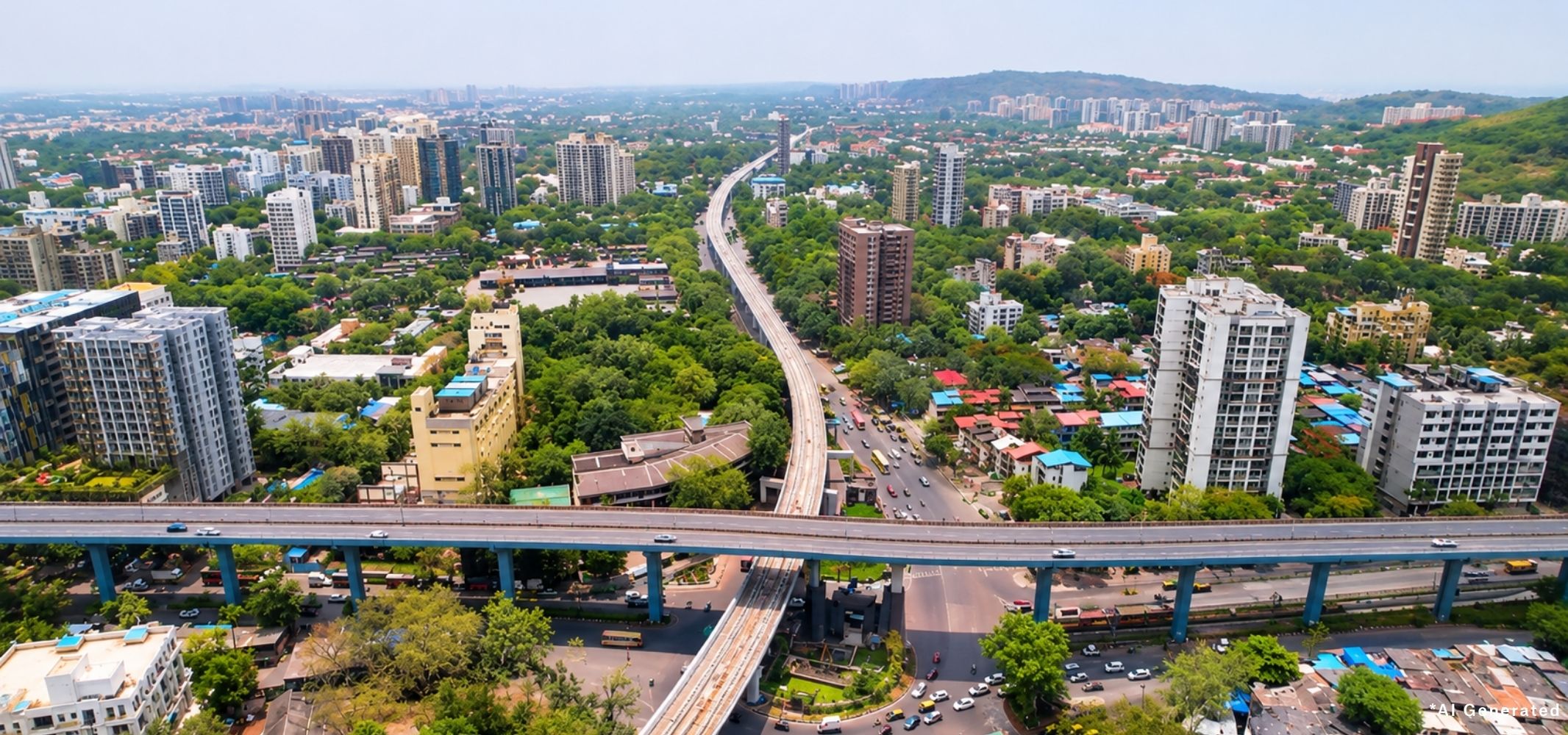
Chembur sits at the crossroads of several major infrastructure corridors, making it one of the most strategically connected suburbs in the city. The Eastern Freeway connects residents to South Mumbai in under 20 minutes during off-peak hours. The Sion-Panvel Highway links the suburb to Navi Mumbai, and the BKC Connector provides a direct route to Bandra-Kurla Complex. The Santacruz Chembur Link Road (SCLR) opens a direct corridor to the Western Suburbs, while the Mumbai Monorail adds another layer of public transit connectivity. Once Metro Line 2B is fully operational, the Chembur station will serve as an interchange between the metro and the Monorail network.
Connectivity has always been one of Chembur’s strongest advantages. What makes the current moment particularly significant is the arrival of major infrastructure upgrades that further strengthen this network. As new transit links become operational, they are set to enhance commuting efficiency and expand access across the city. It is also why the suburb now features prominently among new launch projects in Mumbai.
Metro Line 2B Explained: What the Yellow Line Metro in Chembur Means for Local Commuters
The Mumbai Metro Line 2B (Yellow Line) will serve through two stations, Chembur and Diamond Garden, with the Chembur stop acting as an interchange with the Mumbai Monorail. According to the Mumbai Metropolitan Region Development Authority, the corridor could reduce east-west travel time by 50-75%. For commuters, the Chembur’s Yellow Line Metro stretch means faster access to key business districts such as Bandra Kurla Complex and significantly shorter cross-city journeys. With construction nearing completion, the DN Nagar to Mandale line is expected to become operational soon.
| Feature | Detail |
| Corridor | DN Nagar to Mandale |
| Length | 23.643 km (fully elevated) |
| Stations | 20 (all elevated) |
| Line | Yellow |
| Chembur Station | Station 15 (Monorail interchange) |
| Diamond Garden Station | Station 16 |
| Travel Time Reduction | 50-75% vs. current road conditions |
| Chembur Station Opening | April 2026 (projected) |
| Full Line Completion | Summer 2026 (projected) |
| Project Cost | Rs. 10,986 crore |
| 2031 Ridership (Projected) | 10.5 lakh passengers per day |
Source: MMRDA
If Metro Line 2B makes everyday travel across Mumbai faster for Chembur residents, Atal Setu extends the suburb’s connectivity eastward by bringing Navi Mumbai’s job hubs and the upcoming airport much closer.
Atal Setu and the Navi Mumbai Effect on Chembur's Real Estate
The Mumbai Trans Harbour Link (Atal Setu) became operational in January 2024. The 21.8-kilometre sea bridge connects Sewri in central Mumbai to Chirle, reducing what was once a 90-minute journey to roughly 20 minutes and significantly improving cross-harbour connectivity.
The immediate impact was visible in Navi Mumbai’s residential markets, where Ulwe and Kharghar saw property values rise. As connectivity improves, that demand naturally extends to nearby neighbourhoods with strong access to the bridge, including Chembur. Strong Atal Setu connectivity is one reason buyers are now tracking upcoming projects in Chembur so closely.
Located roughly 10 minutes from the Sewri entry point via the Eastern Freeway, Chembur is well placed for professionals working in key hubs such as Jawaharlal Nehru Port, the upcoming Navi Mumbai International Airport and business areas like Belapur and CBD Belapur.
This brings a new group of tenants and homebuyers to Chembur, which already attracts professionals working in Bandra Kurla Complex, as well as researchers and healthcare professionals from institutions such as Bhabha Atomic Research Centre and KJ Somaiya Hospital. This broadening demand base is already visible in how Chembur's property values have moved over the past decade.
Chembur Property Price Trends: What the Numbers Actually Say
The price trajectory of Chembur real estate reflects the suburb's steady transformation. In the early 2000s, proximity to industrial zones kept property values between ₹2,000 and ₹4,000 per square foot. Major infrastructure such as the Eastern Freeway and the Sion-Panvel Highway triggered the first major price shift, with rates rising to ₹12,000 to ₹18,000 per square foot between 2015 and 2018[1].
Today, property rates in Chembur for multi-storey apartments in Chembur range from ₹31,000 to ₹32,000 per square foot, while premium projects range from ₹35,000 to ₹45,800 per square foot[2]. Chembur also recorded 1% year-on-year appreciation in completed properties and a 44% rise in premiums for under construction projects in the first half of 2025, reflecting growing buyer confidence ahead of the metro launch[3]. Projects located close to the upcoming stations of the Mumbai Metro Line 2B (Yellow Line), particularly around Chembur and Diamond Garden, are already garnering strong buyer interest ahead of the line's operational launch.
Micro-Market Breakdown: Chembur West vs East
Not all parts of Chembur move at the same pace. Overall, the suburb has recorded approximately 18.9% growth over the past five years[4]. The western pocket, flanked by the Bombay Presidency Golf Club, typically attracts premium buyers due to its lower density, proximity to the golf club and concentration of gated developments with larger amenity offerings.
Chembur East presents a more accessible entry point for buyers. Chembur East property rates sit below the western pocket, with broader inventory and lower entry prices. The area often appeals to first-time buyers and investors focused on rental yield, particularly those looking for an apartment in Chembur at a more accessible budget. The upcoming Diamond Garden metro station is close to the boundary between Chembur East and West and improved connectivity is expected to support long-term value across both micro markets.
Rental Landscape: Yields, Demand Drivers and Tenant Profiles
Rental demand in Chembur today comes from three clear groups. The largest are professionals working in Bandra Kurla Complex, who choose the suburb for its road connectivity and the time savings expected once the Mumbai Metro Line 2B (Yellow Line) becomes fully operational. Another segment includes scientists and technical staff from the Bhabha Atomic Research Centre. The third and fastest growing since the launch of the Mumbai Trans Harbour Link (Atal Setu), includes professionals working across Navi Mumbai who prefer an address with easy cross-harbour access.
Rental yields generally range from 2.5 to 3.5%, in line with broader Mumbai trends. Data for the Central Suburbs also shows year-on-year rental growth of 2 to 17%, driven by strong end-user demand and limited supply as older buildings undergo redevelopment[5].
Liveability Scorecard: Green Spaces, Schools and Social Infrastructure
Price growth often gets the spotlight, but liveability is what sustains long-term demand. Chembur stands out for its mix of green spaces, established schools, healthcare facilities and cultural institutions. Diamond Garden is one of the area’s well-kept public parks, while the nearby Bombay Presidency Golf Club adds a large green space that is rare to find in the city.
The suburb is also home to known institutions such as Our Lady of Perpetual Succour High School, KJ Somaiya Medical College and Hospital and the Fine Arts Society. Together, these elements sustain demand across buyer profiles, from investors tracking yield to families searching for flats in Chembur, helping the suburb maintain steady residential demand through different market cycles.
Our Projects in Chembur
Supreme Boulevard Chembur is a larger development spread across approximately 5 acres, featuring four G+34 towers and more than 30 amenities. As a new project in Chembur, it has possession scheduled for March 2029, placing completion well within the period when Metro Line 2B is fully operational. Located about 5 minutes from the metro entry point, the project benefits from strong connectivity within the micro-market.
Investment Checklist: What Buyers Must Verify Before Buying in Chembur
Buying property in Chembur requires the same careful due diligence as any real estate investment in Mumbai. A few key checks can help buyers browsing flats for sale in Chembur, Mumbai understand the project’s legal status, construction progress and financial implications before making a decision. Key things to verify before buying:
MahaRERA Registration
Project Approvals and Certificates
FSI and Development Permissions
Home Loan Tax Benefits
Conclusion
Chembur is entering a new phase of growth as improved connectivity changes how residents move across Mumbai. With the Yellow Line Metro in Chembur nearing completion and the Mumbai Trans Harbour Link (Atal Setu) already operational, the suburb is becoming more connected to both Mumbai’s business districts and Navi Mumbai’s emerging hubs.
What is changing is the speed of that connectivity and with it, the profile of who is choosing Chembur. The suburb is no longer priced in its past. It is being valued on what it is about to become. Developments by Supreme Universal, including Supreme Boulevard, offer homes that align with this next phase of the suburb’s growth.
As of 2025, average apartment prices in Chembur range from ₹31,000 to ₹32,000 per sq ft. Premium gated projects can reach ₹35,000 to ₹45,800 per sq ft, while parts of Chembur East remain more affordable at ₹16,000 to ₹22,000 per sq ft, depending on location and amenities.
The Mumbai Metro Line 2B (Yellow Line) is expected to reduce east-west travel time by 50-75%. Commutes from Chembur to Bandra Kurla Complex, which currently take 45-60 minutes by road, could drop to about 20 minutes by metro.
Chembur is considered a strong investment location due to improving connectivity, ongoing redevelopment and consistent appreciation. With the Mumbai Metro Line 2B (Yellow Line) expected to become operational in 2026 and the Mumbai Trans Harbour Link (Atal Setu) already active, demand continues to grow.
The Mumbai Trans Harbour Link (Atal Setu) connects Sewri to Navi Mumbai in about 20 minutes. Located roughly 10 minutes from the Sewri entry point, Chembur offers quick cross-harbour access for professionals working near Jawaharlal Nehru Port and upcoming business hubs.
Supreme Universal currently has two projects in Chembur: Supreme Elenor, a ready-to-move 19-storey tower with 2 and 3 BHK homes and Supreme Boulevard, a 5-acre development offering 2, 3 and 4 BHK residences with possession scheduled for March 2029.
Rental yields in Chembur typically range from 2.5 to 3.5% for mid to premium apartments, depending on location and amenities.
Visit the MahaRERA portal and search for the project using its name or registration number. The listing shows approvals, possession timelines and escrow compliance. Projects on land above 500 sq metres or with more than eight apartments must be registered before sales begin.